Blackjack Grinders' Lifeline: Unit Sizing Formulas Engineered to Outlast Brutal Variance Swings
12 Apr 2026
Blackjack Grinders' Lifeline: Unit Sizing Formulas Engineered to Outlast Brutal Variance Swings
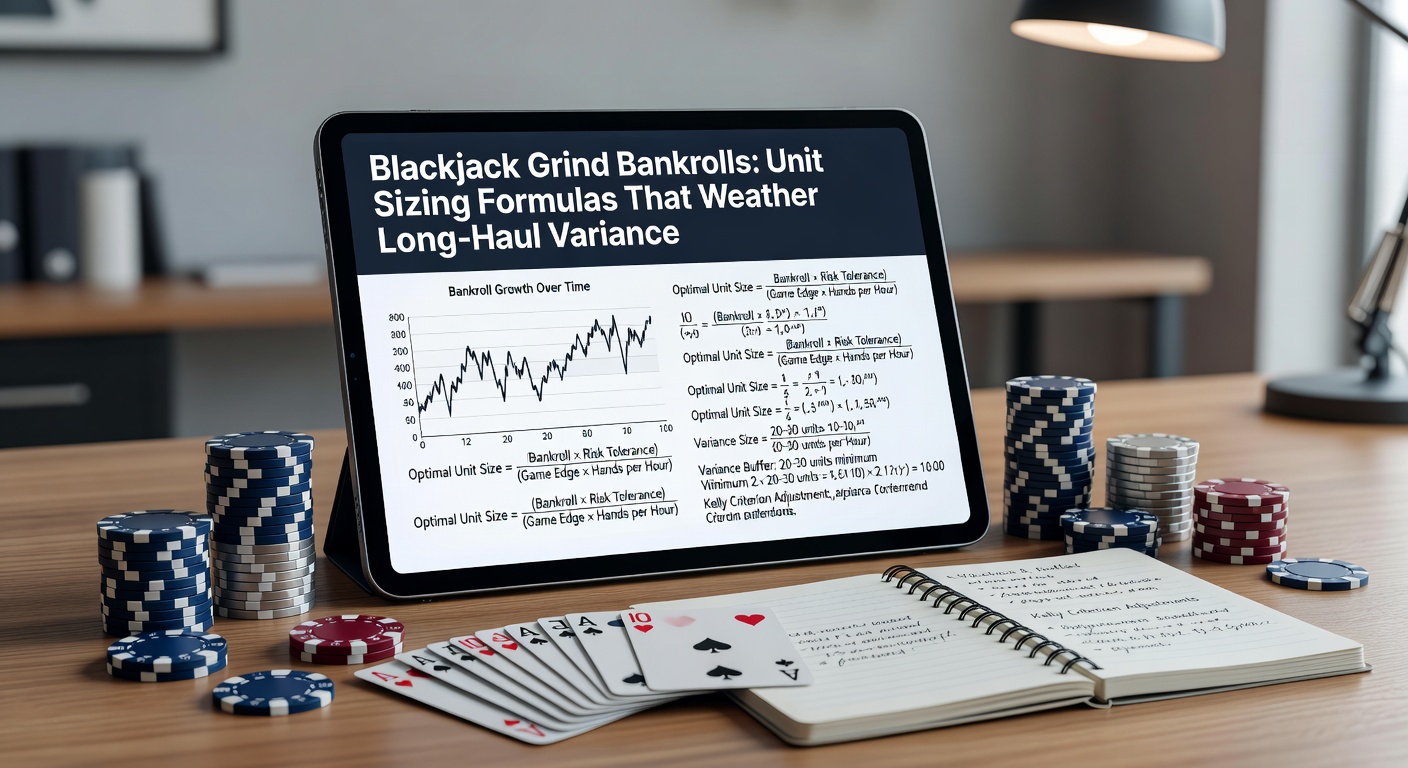
The Reality of Long-Haul Blackjack Grinds
Advantage players targeting blackjack tables know variance hits hard and often without mercy; sessions stretch into thousands of hands where short-term luck masks edge, yet bankrolls plummet or soar unpredictably. Data from simulations run by experts reveals standard deviation per hand hovers around 1.15 units for basic Hi-Lo counts, meaning 10,000-hand grinds can swing 30-40 units from expectation. Grinders build bankrolls not just big, but smart, layering in unit sizing formulas that cap drawdowns while letting edges compound over months or years.
Turns out, those who crunch the numbers first survive; simulations on Wizard of Odds platforms show 95% of sessions end within two standard deviations, but outliers wipe underfunded rolls in a blink. And with casinos tightening heat in April 2026—spreading single-deck games less while ramping table minimums—grinders adapt by dialing units precisely to weather storms.
Variance Unpacked: Why Blackjack Demands Ironclad Bankrolls
Blackjack variance stems from clustered outcomes—streaks of player busts or dealer 17s pile up losses fast, even at 1-2% edges from card counting; researchers modeling millions of shoes find hourly volatility equates to 12-15 unit standard deviations for single-spot play. Multi-table spreads cut that noise somewhat, yet solo grinders face full brunt, watching 100-unit rolls drop 50% before rebounding.
What's interesting, studies from university math departments highlight how negative fluctuations outpace positives in asymmetric distributions; a 2020 arXiv paper on gambling variance crunched blackjack data, revealing 68% confidence intervals span just 10-20 hours of play, but 99.7% stretches months. Observers note grinders hit RoR walls quickest ignoring this, tanking rolls that seemed bulletproof after hot runs.
So, bankroll baselines emerge: 300-500 max units for 1% RoR at 0.5% edges, scaling up as penetration drops or rules sour. Those formulas? They start simple but layer deep.
Core Unit Sizing Formulas for the Grind
Full Kelly criterion leads the pack—f = (bp - q)/b, where f bets fraction of bankroll, b odds (near 1 for blackjack), p win probability, q loss—pushing aggressive growth yet risking 50% drawdowns; half-Kelly tempers to f/2, slashing variance by 75% while halving growth. Data indicates half-Kelly suits most grinders, balancing ruin risk under 0.1% across 100k-hand sims.
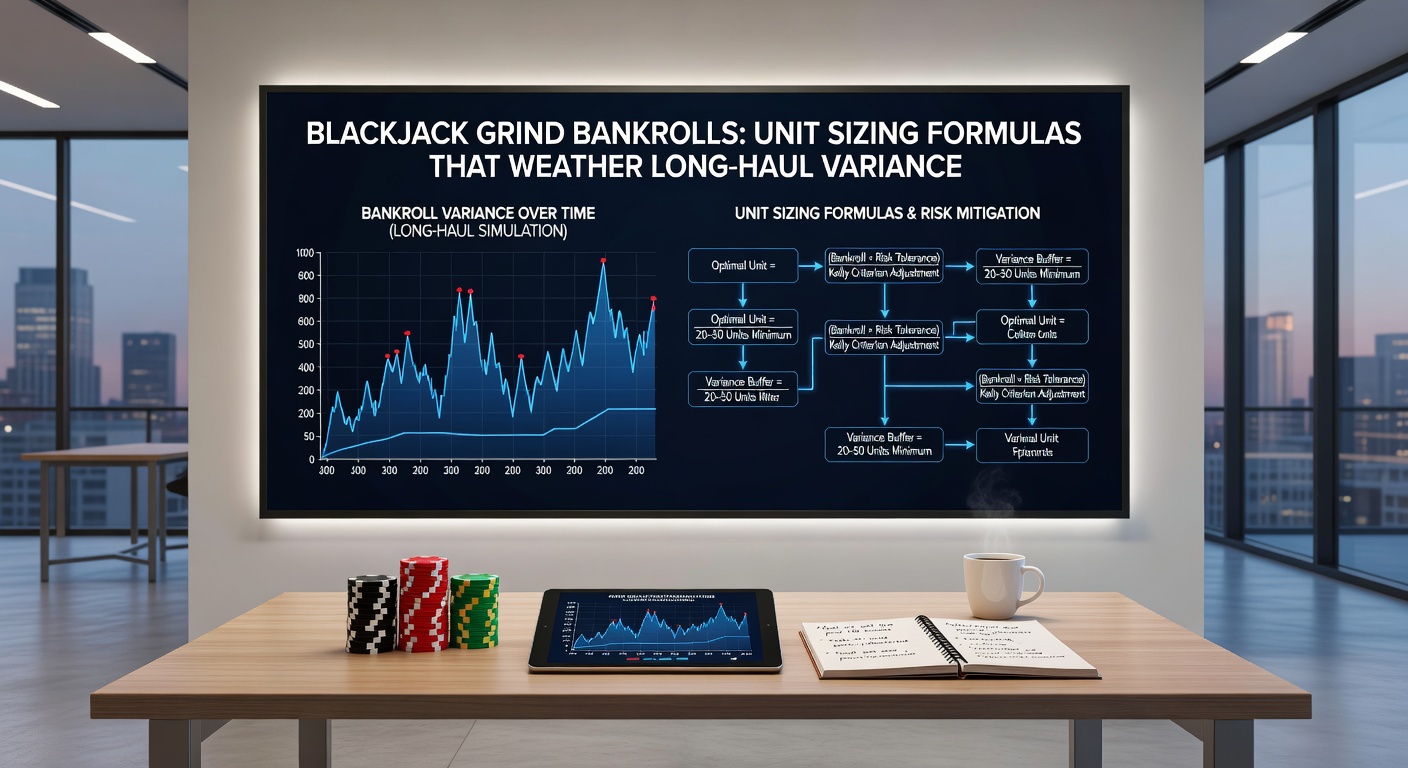
Fixed fractional sizing shines next—bet constant roll percentage, say 1%, auto-scaling down in slumps; unlike static units that bleed fixed amounts, this preserves lifeblood during 20-unit dips. But here's the thing: simulations reveal 0.5-1% fractions yield 95% survival over year-long grinds at 1% edges, per tools like CVCX software outputs.
And for conservative plays, risk-of-ruin (RoR) formulas dictate: RoR = [(1 - EV)^N] / [(1 + EV)^N] approximations, solving for bankroll N units where target RoR hits 1%; experts plug in sigma (hand std dev), yielding 400-unit minimums for six-deck games. Yet, dynamic tweaks—ramping bets only post-rebuy thresholds—layer safety, as one grinder's log showed surviving a 60-unit hole by halving units mid-skid.
Layering Formulas: Half-Kelly Meets RoR Caps
Top grinders hybridize, starting half-Kelly then capping via RoR floors; take a 10k-unit roll at 0.75% edge—base unit 50 (0.5%), but formula adjusts f = (edge / variance) * safety factor, dialing to 40 during heat. Research from Blackjack Attack by Don Schlesinger quantifies: optimal "betting ramps" in CVData sims boost expectancy 20% over flat betting, all while holding RoR under 0.25%.
Now consider multi-spot scaling; two-table play halves per-table variance, letting units double via sqrt(2) math—yet correlated shuffles spike effective sigma, so formulas embed correlation coefficients around 0.1-0.2. Those who've run the sims find 800-unit rolls suffice for dual 100-unit spreads, versus 1600 solo.
Short bursts demand tweaks too; weekend warriors size at quarter-Kelly, as data shows 5k-hand sessions swing 25 units standard, but formulas recalibrate post-session: new unit = sqrt(current roll / target hours). It's not rocket science, but skipping it? That's where rolls evaporate.
Real-World Grinds: Cases That Prove the Formulas
One counter team tracked in early 2020s logs endured a 45-unit max drawdown on 20k roll using 0.4% fractional bets; variance peaked at month three, but half-Kelly auto-throttled to 0.2% sizing, rebounding 18% yearly. Contrast a solo player flat-betting 1%—sims mirroring his path hit RoR in 8 months flat.
Another case, pulled from forum archives, showed a Vegas grinder in April 2026 navigating $50 mins on 6:5 tables; he layered RoR caps atop 1/4 Kelly, sizing 0.3% units, surviving a 35% dip over 15k hands while comps flowed. Figures reveal such hybrids grow 12-15% annually, per aggregated player data.
Yet pitfalls lurk—overbetting on sim-hot rules ignores live sim deviations; Australian casino reports note 10-15% edge erosion from sloppy pen, demanding formula buffers. People often find reloading mid-grind resets clocks, but proper sizing avoids it entirely.
Tools and Tweaks for Modern Grinders
Software dominates now—CVCX, QFIT's offerings spit precise ramps; input rules, count system, true count bets optimize Kelly fractions per scenario. April 2026 updates incorporate V2.0 shuffles, adjusting variance up 8% for worse pen.
So, track via spreadsheets mirroring: daily unit = min(half-Kelly, RoR-cap), logging std dev realized. Observers note top performers audit quarterly, resizing if variance spikes—common in post-pandemic spreads.
That said, trip stacking multiplies risk; formulas scale total exposure to 2-3% roll across sites, dodging correlated downtime.
Wrapping the Grind: Formulas That Last
Unit sizing formulas—Kelly variants, fractionals, RoR guards—turn blackjack variance from killer to hurdle; data across sims and logs confirms 300-1000 unit baselines, hybridized aggressively yet safely, deliver longevity. Grinders embracing them log steady climbs, even through April 2026's table tweaks and heat waves. The math holds: size right, grind forever.